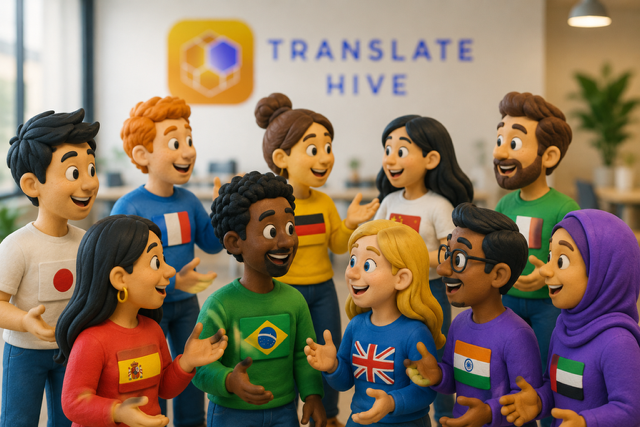
For a brief period, many businesses believed AI would make professional translation almost obsolete. The logic seemed straightforward: if a machine can instantly convert one language into another, why continue investing in human localisation?
However the conversation is beginning to change as businesses are discovering that translation was never really about words alone. The real challenge has always been context.
A sentence can be technically accurate while still sounding unnatural, culturally tone deaf or commercially ineffective. In regulated sectors, it can become even more problematic. Slight ambiguity in legal, medical or technical communication can create reputational damage, operational risk or compliance issues that no business wants to explain after the fact.
What many organisations are now encountering is the difference between linguistic conversion and genuine localisation.
AI is exceptionally good at speed. It can process huge volumes of multilingual content in seconds. It can reduce repetitive workload dramatically. It can assist human linguists in ways that would have been impossible only a few years ago. However AI also has a tendency to flatten language.
As businesses increasingly rely on the same foundational models, content across different brands, industries and even cultures risks becoming strangely uniform. Tone becomes generic. Nuance disappears. Regional expression fades. Marketing language begins to sound interchangeable.
Ironically, the more businesses globalise through AI, the more important authentic localisation becomes. That does not mean businesses should reject AI; quite the opposite.
The most intelligent organisations are no longer asking whether AI should be used in translation. They are asking how it should be used responsibly.
The future of localisation will almost certainly belong to hybrid models that combine automation, workflow efficiency and human expertise. AI will continue to accelerate production and remove administrative friction.
Human linguists will remain essential for judgement, cultural nuance, sector-specific understanding and quality assurance. In other words, the competitive advantage is no longer simply translating faster. It is communicating globally without losing meaning, identity or trust.
At Translate Hive, we believe technology should strengthen multilingual communication, not standardise it into something generic. That is why we combine modern translation technology with experienced human linguists and carefully managed localisation workflows, helping businesses communicate accurately, naturally and confidently across international markets.
We believe that in international communication, being understood is only the starting point.