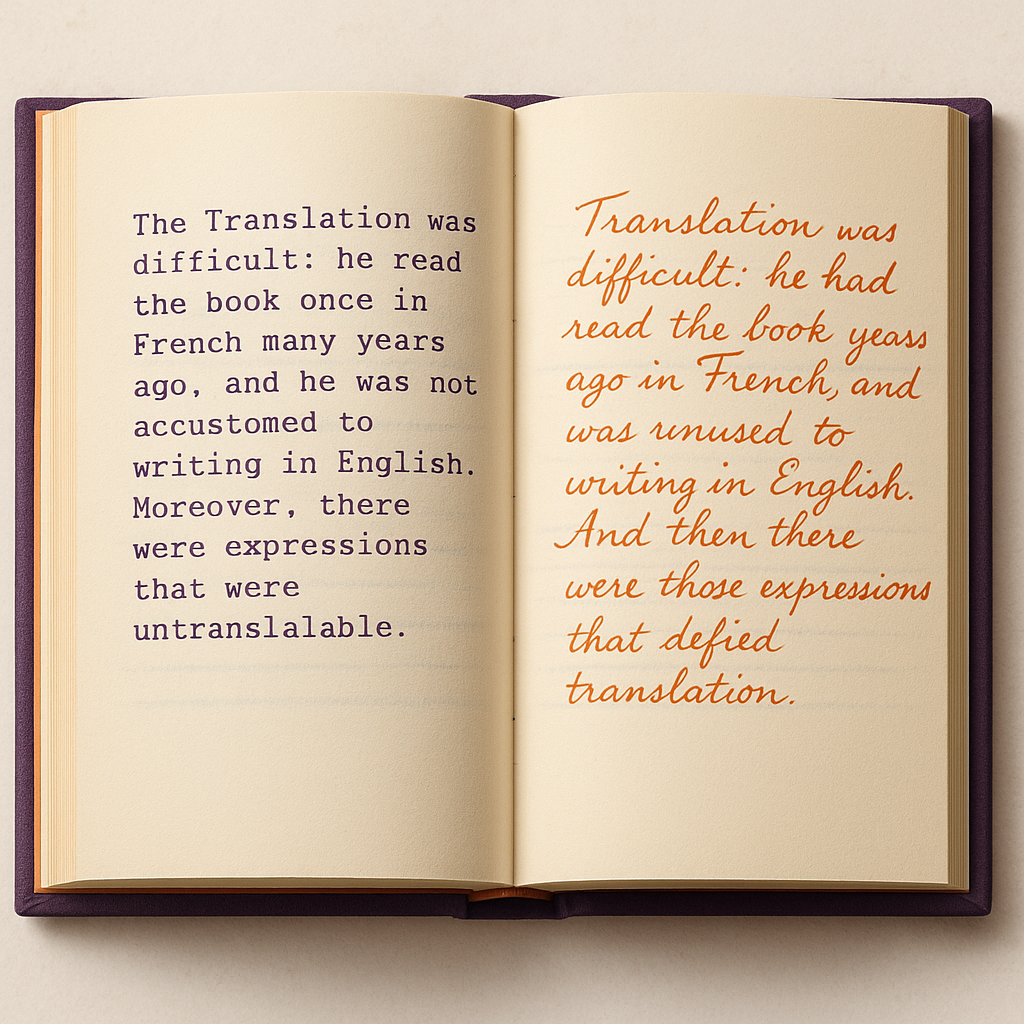
The intersection of artificial intelligence and literary translation is one of the most fascinating and debated topics in the language industry today. At Translate Hive, we reject the notion that machines will replace human translators. Instead, we advocate for collaborative workflows that combine technological efficiency with human artistry.
Why Literary Translation Is Different
Literary translation is fundamentally different from technical or commercial translation. It requires preserving tone, rhythm, cultural resonance, emotional atmosphere and authorial voice — dimensions that go far beyond mere word-for-word conversion.
A novel, a poem, or a screenplay carries the fingerprint of its author. Translating that work into another language means recreating that fingerprint for a new audience, in a new cultural context. It is an act of interpretation as much as translation.
This is where the limits of current AI become apparent. Machine translation excels at speed, pattern recognition and handling large volumes of text. But it cannot yet replicate the creative judgement, cultural sensitivity and emotional intelligence that human translators bring to literary work.
What AI Can Do Well
That said, AI is not without value in the literary translation process. Used responsibly, it can:
- Generate preliminary drafts that give human translators a starting point, reducing the time spent on initial rendering
- Identify patterns across large corpora of text, helping translators maintain consistency in terminology and style
- Handle repetitive or formulaic content within a larger literary project, freeing the translator to focus on the passages that require the most creative attention
- Support terminology management through translation memory and glossaries, particularly useful for series or multi-volume works
The key is understanding that these are tools in service of the translator, not substitutes for them.
What Only Humans Can Do
Certain aspects of literary translation remain firmly in the domain of human expertise:
- Cultural resonance and context: Understanding how a metaphor, joke or cultural reference will land in the target language requires lived experience and cultural literacy that no algorithm possesses
- Authorial voice: Capturing the unique cadence, rhythm and personality of a writer's prose demands creative sensitivity
- Creative adaptation: Sometimes a faithful translation means departing from the literal meaning to preserve the spirit of the original — a judgement call that requires intuition
- Ethical sensitivity: Literary texts often deal with sensitive themes. Navigating these with appropriate care requires human judgement
- Emotional nuance and subtext: The unspoken layers of meaning in literary text — irony, ambiguity, tension — are among the hardest elements to translate and the most important to preserve
The Translate Hive Approach
At Translate Hive, our workflow for literary and creative projects follows a structured process:
- Text assessment and preparation: Understanding the nature of the source text, its genre, audience and specific challenges
- AI-generated initial draft: Where appropriate, using machine translation to create a rough first pass
- Human translation and editorial refinement: Expert translators rework the draft, applying creative judgement, cultural knowledge and stylistic sensitivity
- Quality assurance review: A second linguist reviews the translation for accuracy, fluency and faithfulness to the original
- Client and author collaboration: Where possible, working directly with the author or rights holder to ensure the translation meets their expectations
This hybrid approach allows us to benefit from AI's speed and consistency while ensuring that the final product meets the highest literary standards.
Looking Ahead
The future of literary translation is not a choice between human and machine. It is a collaboration. AI will continue to improve, and translators will continue to find new ways to integrate these tools into their practice.
But the core of literary translation — the creative act of reimagining a text for a new audience — will remain a fundamentally human endeavour. At Translate Hive, we are committed to ensuring that technology serves that endeavour rather than diminishing it.
The translators of the future will not be replaced by machines. They will be empowered by them — working as creative editors, cultural intermediaries and guardians of meaning in an increasingly connected world.